My grandfather - "Papou" - was named Dionysios Marusi. He came from a farming family in the area of Pakia, in southern Greece. Family lore has it that he decided to move to America to escape the military draft in Greece at that time. This would put him squarely in the family tradition of resistance to war. He came from Greece in 1907 on a ship called Principe di Piedmont, out of Naples. For some strange reason, at Ellis Island his English name was given as "William." He arrived with his wife, Alexandra, his 2-year old son, my Uncle Spiro, and a young woman, perhaps a relation, who cared for the baby.
They settled in Minneapolis, Minnesota, a kind of mecca for Greeks at the time, and, with money from his well-to-do wife;s dowry, purchased a candy store, all the time adding children: Antonia, Maria, Stavroula, my mother Christine, and two more boys- Nikos and Charles. There was also another daughter, Minerva, who died very young. All of them, following the Greek custom, bore "William" as their middle name.
Around 1918 or 1919, America went through one of its periodic "morality" spasms, and one by one, states passed laws against the consumption of liquor. One would put a sign in the window that said "DRY" to signal that this family too wanted the law to pass. My grandfather posted a huge "WET" sign in his window. Despite his effort, the law passed and Prohibition became one of the dumbest laws of the land ever - and there is much competition for that honor. During the Depression, he lost his store, but, as my mother always said, "rolled up his sleeves" and went to work in a candy factory.
In 1940, with the Italians and the Germans were poised to invade, Dionysios Marusi went back to Greece, to try and sell some of his wife's ancestral land near Gythio, a lovely port town quite close to Pakia. In this he was unsuccessful, but he did visit the home of his nephew, my Uncle George, and there attended a wedding of a cousin. A photo was taken of this occasion, and imagine my amazement 65 years later to arrive in Pakia at the home of my cousins and see my grandfather looking out at me from this photo. Word has it that he was quite the life of the party - he loved to dance and got so drunk that when he went horseback riding he fell off his horse. "WET," indeed. He hated Germans until the end of his life, given the atrocities committed by Hitler's Army during the occupation of 1941-44.
Later, when the family had moved to San Francisco, he had a house on Westgate Drive, where I lived before my dad came back from the Pacific War. There was a dog named Lucky and a haunting picture of Jesus, whose eyes, it was said, would open and close if you stared at them long enough. Every day, my grandfather would down a glass of lemon water and a tumbler of wine, first thing in the morning. He spoke no English. I used to sit next to him at the table and he would show me his hands, which were wrinkled and veiny. "Nyonyo (my nickname) look. Papou old man." We all, my cousins Denny and Danny and myself bore his name in one form or another - "Denny" and "Danny" were the usual translations of Dionysios; "Bill" was the extension of some immigration officer's moment of twisted inspiration. He died in 1960, at the age of 80 or so.
One story about him especially bears repeating: One Sunday, my grandmother and all her daughters attended a wedding at the the Greek (now Armenian) Church on 7th street in San Francisco. Before the wedding they were waiting outside and one of the daughters asked, "When will the wedding party get here, mother?" At this moment, my grandfather, who had slipped away to have some drinks, came around the corner, smashed, and leaning on a building for support. My grandmother pointed to him and said, "I don't know, but here comes the bride."
Friday, November 25, 2011

Saturday, November 12, 2011
Things I Like About Greece
My Favorite Things About Greece (So Far)
For this blog entry I wasn't exactly sure what to write about, so I decided to make a list of the things I find particularly enjoyable in Greece so far and why!
1. Going to the Farmer's Market- I love going to the market every Wednesday and Saturday in Kalamata! All the food is so fresh and most of it is organic. There are so many varieties and you see things you would probably never see in the U.S. It is completely crowded too. Everyone and their mother goes to the market. I literally have to hold onto my dad, Jelly or Sylvia so that we won't get separated because the hordes of people are pushing from all sides.
2. Biking in Kalamata- Jelly and I rented bikes here and now we are able to go to cafes or the center of town regularly. It is really easy to bike here because of the bike lanes provided by the city that have made a route from the beach to the center of town.
3. The Olives- The olives here really are just the most amazing thing. The Kalamata olives are so fresh and rich with flavor, I haven't tasted anything like to them anywhere else in my entire 19 years of living.
4. Relatives- So far we have only met some of the relatives here in Greece. The ones we have met though, Patty and Nikki are so amazing. They were so welcoming and hospitable. Both of them had amazing stories about the area where they live (Pakia) and WWII. I really enjoyed staying with them for a few days and learning more about my family history in Greece. The best thing was getting to know them and hearing their opinions about the current state of affairs in Greece.
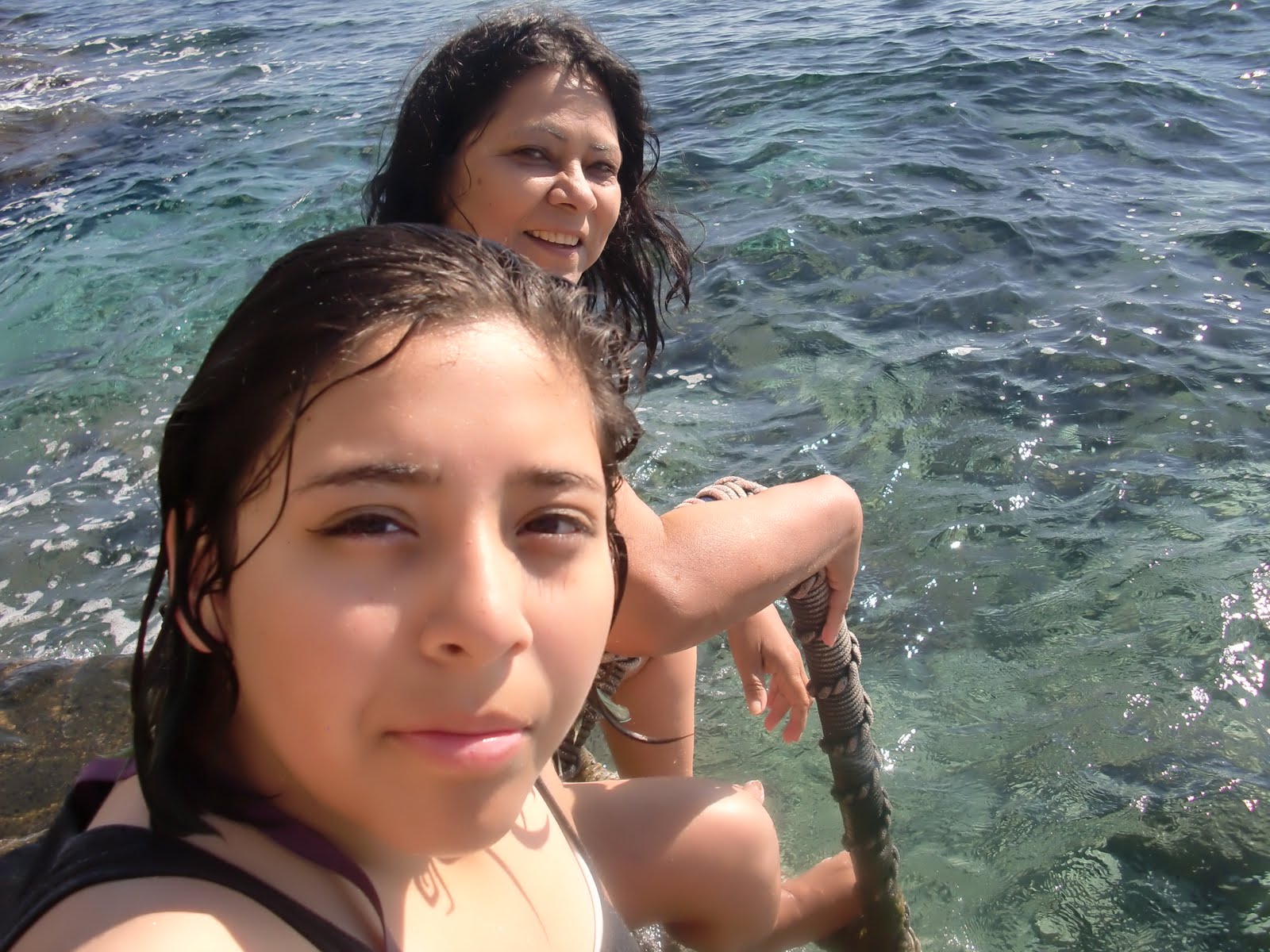
5. The Beach- Here in Kalamata and all over Greece the ocean and beaches are so beautiful. The water is clear and you can see everything at the bottom. It is a little cold when you first get in, but once you swim around the water is perfect.
6. Learning Greek- Although I haven't been as studious in my Greek studies as I'd like to be, because I am always engrossed with loads of online homework, I hope to concentrate on it more. Every Tuesday from 1-3 we go to Greek classes with our teacher Katerina. She and another woman run a language school to teach Greek kids how to speak English in Kalamata. So far, we have only gone twice, but I have learned a lot. Our teacher is really kind an patient with us and she is a really interesting person to talk to. She like many other Greeks is very vocal about her opinion on the current political/ economic situation, so it's interesting to hear about it from a true Greek.
7. Going to Cafes- Something that I don’t really do or have time for in the U.S. is sitting in cafes and doing work on my computer and just watching the people go by. In Greece you see so many people sitting in cafes outside, just enjoying their day and company. They sit for hours on end just talking, smoking and drinking coffee. The only reason I really go is to use wifi and do my online schooling, but it's nice to see how other people socialize and spend their time, especially when its so different from the United States.
8. Visiting the Ruins- So far we have visited the ruins at Messini and Olympia and they are so amazing. It's really astounding to see ancient ruins here that I hear about in my history classes. Many of them are pretty well preserved and really show you how people use to live. Some of them date back to the 1st and 2nd century AD and just amaze me every time that they are over 2,000 years old and have survived through so much war, conquest and change that has taken place over the centuries.
9. Eating New Food- Even though I am a pesco-vegetarian, I still find some really great new food that is Greek. My favorite is tiropita, which is feta cheese inside filo dough. It's so good and is usually eaten at breakfast. Plus, it is a nice alternative to spanakopita, which is like it, except it has spinach and has been my least favorite food since I was about 4 years old.
10. The Nice people we have met here- Sometimes when traveling you are lucky enough to find people who are genuinely nice and make your time that more memorable. Patty and Nikki definitely go under this category. Along with our Greek teacher who is really informative and gives us good advice about where to go for good bargains. Then there is Maria, who owns the cottage we are staying at. Even though, she doesn’t speak very much English, I see her everyday and she always has a smile on her face and a warm welcome that never gets old. Hopefully there will be more people to add to this list, but as of know those are the few I can think of!
Hope you enjoyed my list and that it gave you some insight into our life here in Greece and some of the things that continue to make this trip awesome!
- Vita (:
For this blog entry I wasn't exactly sure what to write about, so I decided to make a list of the things I find particularly enjoyable in Greece so far and why!
1. Going to the Farmer's Market- I love going to the market every Wednesday and Saturday in Kalamata! All the food is so fresh and most of it is organic. There are so many varieties and you see things you would probably never see in the U.S. It is completely crowded too. Everyone and their mother goes to the market. I literally have to hold onto my dad, Jelly or Sylvia so that we won't get separated because the hordes of people are pushing from all sides.
2. Biking in Kalamata- Jelly and I rented bikes here and now we are able to go to cafes or the center of town regularly. It is really easy to bike here because of the bike lanes provided by the city that have made a route from the beach to the center of town.
3. The Olives- The olives here really are just the most amazing thing. The Kalamata olives are so fresh and rich with flavor, I haven't tasted anything like to them anywhere else in my entire 19 years of living.
4. Relatives- So far we have only met some of the relatives here in Greece. The ones we have met though, Patty and Nikki are so amazing. They were so welcoming and hospitable. Both of them had amazing stories about the area where they live (Pakia) and WWII. I really enjoyed staying with them for a few days and learning more about my family history in Greece. The best thing was getting to know them and hearing their opinions about the current state of affairs in Greece.
5. The Beach- Here in Kalamata and all over Greece the ocean and beaches are so beautiful. The water is clear and you can see everything at the bottom. It is a little cold when you first get in, but once you swim around the water is perfect.
6. Learning Greek- Although I haven't been as studious in my Greek studies as I'd like to be, because I am always engrossed with loads of online homework, I hope to concentrate on it more. Every Tuesday from 1-3 we go to Greek classes with our teacher Katerina. She and another woman run a language school to teach Greek kids how to speak English in Kalamata. So far, we have only gone twice, but I have learned a lot. Our teacher is really kind an patient with us and she is a really interesting person to talk to. She like many other Greeks is very vocal about her opinion on the current political/ economic situation, so it's interesting to hear about it from a true Greek.
7. Going to Cafes- Something that I don’t really do or have time for in the U.S. is sitting in cafes and doing work on my computer and just watching the people go by. In Greece you see so many people sitting in cafes outside, just enjoying their day and company. They sit for hours on end just talking, smoking and drinking coffee. The only reason I really go is to use wifi and do my online schooling, but it's nice to see how other people socialize and spend their time, especially when its so different from the United States.
8. Visiting the Ruins- So far we have visited the ruins at Messini and Olympia and they are so amazing. It's really astounding to see ancient ruins here that I hear about in my history classes. Many of them are pretty well preserved and really show you how people use to live. Some of them date back to the 1st and 2nd century AD and just amaze me every time that they are over 2,000 years old and have survived through so much war, conquest and change that has taken place over the centuries.
9. Eating New Food- Even though I am a pesco-vegetarian, I still find some really great new food that is Greek. My favorite is tiropita, which is feta cheese inside filo dough. It's so good and is usually eaten at breakfast. Plus, it is a nice alternative to spanakopita, which is like it, except it has spinach and has been my least favorite food since I was about 4 years old.
10. The Nice people we have met here- Sometimes when traveling you are lucky enough to find people who are genuinely nice and make your time that more memorable. Patty and Nikki definitely go under this category. Along with our Greek teacher who is really informative and gives us good advice about where to go for good bargains. Then there is Maria, who owns the cottage we are staying at. Even though, she doesn’t speak very much English, I see her everyday and she always has a smile on her face and a warm welcome that never gets old. Hopefully there will be more people to add to this list, but as of know those are the few I can think of!
Hope you enjoyed my list and that it gave you some insight into our life here in Greece and some of the things that continue to make this trip awesome!
- Vita (:
Saturday, November 5, 2011
Messinian Ruins!!!
Hi! It's Cynthia again and for this entry I want to talk about the Messianian ruins we saw. One day we took a road trip to these ruins and wandered around looking at all the cool looking structures and columns. We soon started taking pictures and posing for them like insane people like us do. I thought it was really peaceful and enchanting, knowing that people have been using them since 2nd century B.C. It was kinda weird to know that ancient people stood, sat, talked, laughed, and gossiped the same place that I was at, and how crazy it was that it was still there. The ruins used to include a track for racing, an amphitheater, areas just to hang out, and a temple to Artemis (goddess of the moon, archery, and maidens). Anyway it was a lot of fun to do some exploring around ancient ruins and I had a really nice time! Until next time...
- Cynthia Nayeli Moncada
- Cynthia Nayeli Moncada
Friday, November 4, 2011



Sunday, October 30, 2011
Sabores in Greece!
The food we eat in Greece.
We are eating very well, mostly doing our own cooking. Greek food in the southern Peloponese is rather simple. Being a hot climate, like Mexico, people here eat freshly prepared foods. Traditional Greek meals, before the advent of global markets, had a few ingredients prepared in a variety of ways. Meats were reserved for special days. I have learned how to cure and bottle Kalamata black olives from the owners of the cabin where we are staying. The owner is Maria, who speaks little English, but we have managed to communicate with her. Her grandson Giorgos, who is about 25 years old and speaks good English translates for us. The house is surrounded by olive trees and they allowed us to pick olives and then taught us how to cure and store them. There are two varieties here - the tall broad-leafed Kalamata black olives and the smaller wider trunked tree of the olives for oil production.Giorgos also said that this area is famous for balsamic vinegar, kalamata figs, (ripened on the tree), sesame pastelli and honey. The Kalamata area is also known for its aged pork meats, like Siglino in the Mani and Lukaniko me portocali. Most particular to this area is Pasto, pork that is smoked and aged in oil. You eat the meat first; the skin and fat is reserved for the time of the olive harvest in winter when you go out into the fields and need lots of carbohydrates for hard labor. As you drive around you see olive trees clinging to the steep dry hills and then you come into lush river watered valleys covered with orange trees, grape vines and growing fields.
It is now October in Kalamata and the agora's (public market's) outside stalls are full with the bounty of the fall harvest. As I walk through the stalls I hear, "Kiria this and Kiria that. This place is like a beehive with activity. I see dozens of stalls with produce that farmers have brought down from the hill towns and valleys to sell. " Patatas to Mavromati", a man yells out in a thunderous voice. There are tables and tables with grapes, apples, raw olives, potatoes, tomatoes, cucumbers, giant cabbages, carrots, greens of all kinds like spinach and dandelions, at least 10 vendors of botanika, or dried herbs and mieli, honey. I buy fresh pink beans from a lady that also bundles spinach leaves with a few sprigs of fresh parsley and fennel for spanakopitas and such. Inside the long market building you find chicken and meats (Hasapiko) that are hanging freshly butchered and cut right before you, as well as a whole section of sea foods.The fish mongers are the loudest, handing you little metal pans so you can grab your own fish or squid. Reminds me of Pike's Market in Seattle. Lastly or daily, we stop at the furnio or bakery. The bread is so good; they bake it in wood burning ovens. And then there are the cafenions that surround the market. Here the old men or husbands sit facing the market while sipping coffee and water and discuss who knows what, with the man in the long black robe and black chef's hat. We also sit with bags full of food for the week at our feet and sip our cafe elinikon (as in Turkish coffee-but that's another story)while in the background a musical trio composed of accordion, bouzuki and clarinet, play “Vagelio” in honor of Bill's grandfather, Dionisis Maroosis of Pakia, whose family produced olive oil.
Salata Horiatiki
"I can eat Greek salad every day." was Jelly's comment when we had our first meal in Greece. "I don't usually like tomatoes but these taste so good."She now has become our expert Greek salad (salata horiatiki) maker. It's a basic bowl of tomatoes, olives, cucumbers, red onions and Feta. We have had some variations, some tavernas add sliced pepper or we had pickled dandelions in Monemvasia added as garnish, but this is how we make it in our Kalamata home.
Greek Salad for 4:
Combine in a bowl: 2 large tomatoes peeled and cut into chunks, 1 long cucumber peeled and sliced, 1/2 small sliced red onion, some olives, a thick slice of Feta cheese
For dressing you can mix in a cup and then pour or add directly over salad: 2 spoons of olive oil, 1/2 spoon of vinegar, pinch of oregano, pinch of salt.
(We really don't measure, we just pour from the bottle, ala greca!)
Stuffed Tomatoes, Peppers and Eggplants
Bill's cousins in Pakia made this dish for us. Patti and Nikki are great cooks and spoiled us when we were visiting with lavish, mostly vegetarian dishes. Every dinner was accompanied with greek salad and sliced bread and great conversation. They worked in London and are now retired. Although, they were infants during the German occupation and civil war they have some recollections/parents memories of that era. They are also very politically informed and it's wonderful to hear their opinion of the current affairs. The stuffed tomatoes/peppers are traditionally made around this time of the year. Patti prepared the day before by doing all the shopping in the agora (food store): large tomatoes, peppers (red and green) eggplants (small size) chopped lamb, rice, chopped onions, chopped parsley. Patti and Nikki cut and prepped everything the night before over glasses of wine and conversations on everything from the state of the economy to saving seeds native to Greece. I mostly took photos, drank wine and shared my experiences in the garden and life in the U.S. in general. They washed the rice and set aside to dry. Next the tops of the tomatoes and peppers and removed the inside to form little bowls, also, cut the eggplants in half lengthwise and scooped them up. Save the tomatoes pulp and juice for the stuffing. Nikki placed the "bowls" in a large lasagna type oven pan and salted then poured a little oil in each. She then made a mixture of rice, meat, tomato sauce, parsley, slightly sauteed onions, salt and pepper. She mixed it all pretty good with her hands and then spooned it into the vegie bowls. She was having so much fun-I was jealous. Meanwhile Patti was making a hollandaise type white cheese sauce. I didn't see how she made it. Nikki spooned the sauce over the stuffing. Nikki, a chain smoker, was always with a cigarette in her mouth or in the process of lighting one up. Patti, who is younger, covered the stuffed veggies with foil and stuck them in the fridge to be cooked tomorrow. It was already tomorrow-past 12 am. The next morning she cooked them in 350 degree oven for 50 minutes or so. We took some as going away presents and ate them days later and they were still Deliciosos!
Kalamata Olives, the big black ones-The Jaractez Method
Recipe from Maria as translated by Giorgos on Oct. 27, 2011
Pick ripe black olives off the tree-forget the ones on the ground-they are bruised or insect bitten.
Take olive lengthwise and make three cuts with sharp knife.
Put in any bowl you have. Top with cool water and 1 tsp of sea salt. Set aside for 4 hours to remove the bitter juice. or so-"This is Greece, do as you like."
Then drain olives and put in a bowl (Maria showed me that she puts them then in wide-mouthed plastic jar) add 1 teaspoon salt (or so) and cover with wine vinegar over night.
Next morning drain the vinegar into bottle (to be used for salad dressing) don't wash, place in jar with some of the vinegar water (or not) and top with olive oil-must be totally covered. They are ready when they are slightly bitter. Taste in a month or so . If too bitter put in fresh water for one week. Change water frequently until right to your taste.
To prepare for the table: spoon a few olives from curing jar into serving dish, drizzle with olive oil and add a pinch of oregano or thyme (as you like).
Or (Nero and Lati) Salt and Water method: place olives in water to cover add salt and don't change the water, cover and leave as they are for one year.
The trick, whether you use the cut method or not is that when you take them out of jar, check for bitterness, if too bitter place in water and change water frequently until you like the taste. Then spoon into serving dish and drizzle with olive oil and sprinkle oregano or thyme.
We are eating very well, mostly doing our own cooking. Greek food in the southern Peloponese is rather simple. Being a hot climate, like Mexico, people here eat freshly prepared foods. Traditional Greek meals, before the advent of global markets, had a few ingredients prepared in a variety of ways. Meats were reserved for special days. I have learned how to cure and bottle Kalamata black olives from the owners of the cabin where we are staying. The owner is Maria, who speaks little English, but we have managed to communicate with her. Her grandson Giorgos, who is about 25 years old and speaks good English translates for us. The house is surrounded by olive trees and they allowed us to pick olives and then taught us how to cure and store them. There are two varieties here - the tall broad-leafed Kalamata black olives and the smaller wider trunked tree of the olives for oil production.Giorgos also said that this area is famous for balsamic vinegar, kalamata figs, (ripened on the tree), sesame pastelli and honey. The Kalamata area is also known for its aged pork meats, like Siglino in the Mani and Lukaniko me portocali. Most particular to this area is Pasto, pork that is smoked and aged in oil. You eat the meat first; the skin and fat is reserved for the time of the olive harvest in winter when you go out into the fields and need lots of carbohydrates for hard labor. As you drive around you see olive trees clinging to the steep dry hills and then you come into lush river watered valleys covered with orange trees, grape vines and growing fields.
It is now October in Kalamata and the agora's (public market's) outside stalls are full with the bounty of the fall harvest. As I walk through the stalls I hear, "Kiria this and Kiria that. This place is like a beehive with activity. I see dozens of stalls with produce that farmers have brought down from the hill towns and valleys to sell. " Patatas to Mavromati", a man yells out in a thunderous voice. There are tables and tables with grapes, apples, raw olives, potatoes, tomatoes, cucumbers, giant cabbages, carrots, greens of all kinds like spinach and dandelions, at least 10 vendors of botanika, or dried herbs and mieli, honey. I buy fresh pink beans from a lady that also bundles spinach leaves with a few sprigs of fresh parsley and fennel for spanakopitas and such. Inside the long market building you find chicken and meats (Hasapiko) that are hanging freshly butchered and cut right before you, as well as a whole section of sea foods.The fish mongers are the loudest, handing you little metal pans so you can grab your own fish or squid. Reminds me of Pike's Market in Seattle. Lastly or daily, we stop at the furnio or bakery. The bread is so good; they bake it in wood burning ovens. And then there are the cafenions that surround the market. Here the old men or husbands sit facing the market while sipping coffee and water and discuss who knows what, with the man in the long black robe and black chef's hat. We also sit with bags full of food for the week at our feet and sip our cafe elinikon (as in Turkish coffee-but that's another story)while in the background a musical trio composed of accordion, bouzuki and clarinet, play “Vagelio” in honor of Bill's grandfather, Dionisis Maroosis of Pakia, whose family produced olive oil.
Salata Horiatiki
"I can eat Greek salad every day." was Jelly's comment when we had our first meal in Greece. "I don't usually like tomatoes but these taste so good."She now has become our expert Greek salad (salata horiatiki) maker. It's a basic bowl of tomatoes, olives, cucumbers, red onions and Feta. We have had some variations, some tavernas add sliced pepper or we had pickled dandelions in Monemvasia added as garnish, but this is how we make it in our Kalamata home.
Greek Salad for 4:
Combine in a bowl: 2 large tomatoes peeled and cut into chunks, 1 long cucumber peeled and sliced, 1/2 small sliced red onion, some olives, a thick slice of Feta cheese
For dressing you can mix in a cup and then pour or add directly over salad: 2 spoons of olive oil, 1/2 spoon of vinegar, pinch of oregano, pinch of salt.
(We really don't measure, we just pour from the bottle, ala greca!)
Stuffed Tomatoes, Peppers and Eggplants
Bill's cousins in Pakia made this dish for us. Patti and Nikki are great cooks and spoiled us when we were visiting with lavish, mostly vegetarian dishes. Every dinner was accompanied with greek salad and sliced bread and great conversation. They worked in London and are now retired. Although, they were infants during the German occupation and civil war they have some recollections/parents memories of that era. They are also very politically informed and it's wonderful to hear their opinion of the current affairs. The stuffed tomatoes/peppers are traditionally made around this time of the year. Patti prepared the day before by doing all the shopping in the agora (food store): large tomatoes, peppers (red and green) eggplants (small size) chopped lamb, rice, chopped onions, chopped parsley. Patti and Nikki cut and prepped everything the night before over glasses of wine and conversations on everything from the state of the economy to saving seeds native to Greece. I mostly took photos, drank wine and shared my experiences in the garden and life in the U.S. in general. They washed the rice and set aside to dry. Next the tops of the tomatoes and peppers and removed the inside to form little bowls, also, cut the eggplants in half lengthwise and scooped them up. Save the tomatoes pulp and juice for the stuffing. Nikki placed the "bowls" in a large lasagna type oven pan and salted then poured a little oil in each. She then made a mixture of rice, meat, tomato sauce, parsley, slightly sauteed onions, salt and pepper. She mixed it all pretty good with her hands and then spooned it into the vegie bowls. She was having so much fun-I was jealous. Meanwhile Patti was making a hollandaise type white cheese sauce. I didn't see how she made it. Nikki spooned the sauce over the stuffing. Nikki, a chain smoker, was always with a cigarette in her mouth or in the process of lighting one up. Patti, who is younger, covered the stuffed veggies with foil and stuck them in the fridge to be cooked tomorrow. It was already tomorrow-past 12 am. The next morning she cooked them in 350 degree oven for 50 minutes or so. We took some as going away presents and ate them days later and they were still Deliciosos!
Kalamata Olives, the big black ones-The Jaractez Method
Recipe from Maria as translated by Giorgos on Oct. 27, 2011
Pick ripe black olives off the tree-forget the ones on the ground-they are bruised or insect bitten.
Take olive lengthwise and make three cuts with sharp knife.
Put in any bowl you have. Top with cool water and 1 tsp of sea salt. Set aside for 4 hours to remove the bitter juice. or so-"This is Greece, do as you like."
Then drain olives and put in a bowl (Maria showed me that she puts them then in wide-mouthed plastic jar) add 1 teaspoon salt (or so) and cover with wine vinegar over night.
Next morning drain the vinegar into bottle (to be used for salad dressing) don't wash, place in jar with some of the vinegar water (or not) and top with olive oil-must be totally covered. They are ready when they are slightly bitter. Taste in a month or so . If too bitter put in fresh water for one week. Change water frequently until right to your taste.
To prepare for the table: spoon a few olives from curing jar into serving dish, drizzle with olive oil and add a pinch of oregano or thyme (as you like).
Or (Nero and Lati) Salt and Water method: place olives in water to cover add salt and don't change the water, cover and leave as they are for one year.
The trick, whether you use the cut method or not is that when you take them out of jar, check for bitterness, if too bitter place in water and change water frequently until you like the taste. Then spoon into serving dish and drizzle with olive oil and sprinkle oregano or thyme.
Wednesday, October 26, 2011
TheirStories
Everybody's got a story. Those “normal” everyday people, the ones you see every day in the marketplace or on the street have all been part of history. They have peopled the events in the histories we read and fleshed out the ideas we talk over and argue about.
Take my cousins here in Greece, Potitsa Maroussi and Niki Papadimas. They are two very kind and thoughtful Greek ladies, now caring for their bedridden mother, my aunt Angeliki in the town of Pakia. They are two Greek woman who went to England to work when they were young and then returned to the family farm to retire. But, like I say, nothing is so simple..
In 1940, the fascists under Benito Mussolini demanded territorial concessions from Greece, including free passage through the country and the right to build military bases on Greek soil. On October 28 of that year, the Greek Prime Minister answered a resounding “NO! (Oxi!)” to the Italian demands. Mussolini, from his base in Albania, then invaded, or tried to invade, Greece. In a series of battle over several weeks, the Greeks hurled the Italians back and took over parts of Albania.
This infuriated Mussolini's fascist parter, Adolf Hitler, then planning his grand invasion of The Soviet Union. He diverted some of his Panzers and invaded Greece, eventually subduing the country in five weeks. In payment for his lost time, he ordered a particularly brutal occupation, which included wholesale murder and starvation for the Greek population. But many historians consider that those five weeks were the difference that spelled the eventual failure of the Soviet campaign for the Germans. Winston Churchill celebrated the Greek Army with one of his typical inverted homilies: “Not every Greek fought like a hero, but every hero fought like a Greek.”
That is the history. The personal side of the war, for the Maroussi, is as follows. Pakia, with its wide flat valley, was selected by the Nazis as a landing strip and departure point for planes carrying supplies to German forces in Crete, Malta, and to General Erwin Rommel's Afrika Korps in Libya. My uncle George joined the resistance and took to the mountains around Pakia, coming down now and then to raid German garrisons in the area. The SS identified him and went to his home, where my aunt lived with her four – year old daughter, Niki. The Germans questioned the little girl, but she had been prompted to say that she was the daughter of a shepherd who had “forty or fifty sheep.” The Germans took her anyway, and imprisoned her with other hostages in the local jail. The partisans, led by Uncle George, attacked the outpost and rescued her and the others. She spent the rest of the war living in the mountains with the resistance forces.
After the Germans left Greece (as the result of a wartime deal between Hitler and Churchill), the partisan resistance forces, banded together as ELAM, fought a long and bitter civil war for control of the post war government, hoping to replace the monarchy with a democratic socialist government. As happened in many similar situations, the right wing forces supporting the monarchy were often the very same people who had collaborated with the Nazis! At first widely successful, the democratic fighters were undone by massive US aide to the government, and the rigid, authoritarian stance of the Stalinists among them, who as the stewards of Soviet aid, favored a murderous campaign of fear and terror. By 1949, the civil war was over; the US – backed anti-communist forces had triumphed and Greece was saved from progressive democracy.
During the following years my uncle George, who had fought with the leftists, had to leave Pakia. The conservative ruling group had put a price on his head, and the family went to Athens, where they lived in a makeshift treehouse in the slums outside the city. Old friends and relatives were afraid to help them. The police were on the lookout for him and once he was actually arrested. Finally,a distant relative helped raised enough money and bribed the police to let him go.
Later, after several very hard years in Athens, Uncle George and his family moved back to Pakia. His main accusers had died and he and my aunt Angeliki were able to spend their retired years at the family home.
I met him in 1997, but that is another story. My cousins have been unfailingly generous and hospitable to us each time we visit Greece. Even when tending their invalid mother, they welcomed us and opened their house to us. But they have done more. They have passed on to me chapters of their personal history, which, by extension has become my own. Peppermint Pati and Niki the Greek. Two ordinary ladies? Yes, but only ordinary in sense that each of us has lived history and participated in the making of it. Oh, yes...Happy “Oxi” Day.
Take my cousins here in Greece, Potitsa Maroussi and Niki Papadimas. They are two very kind and thoughtful Greek ladies, now caring for their bedridden mother, my aunt Angeliki in the town of Pakia. They are two Greek woman who went to England to work when they were young and then returned to the family farm to retire. But, like I say, nothing is so simple..
In 1940, the fascists under Benito Mussolini demanded territorial concessions from Greece, including free passage through the country and the right to build military bases on Greek soil. On October 28 of that year, the Greek Prime Minister answered a resounding “NO! (Oxi!)” to the Italian demands. Mussolini, from his base in Albania, then invaded, or tried to invade, Greece. In a series of battle over several weeks, the Greeks hurled the Italians back and took over parts of Albania.
This infuriated Mussolini's fascist parter, Adolf Hitler, then planning his grand invasion of The Soviet Union. He diverted some of his Panzers and invaded Greece, eventually subduing the country in five weeks. In payment for his lost time, he ordered a particularly brutal occupation, which included wholesale murder and starvation for the Greek population. But many historians consider that those five weeks were the difference that spelled the eventual failure of the Soviet campaign for the Germans. Winston Churchill celebrated the Greek Army with one of his typical inverted homilies: “Not every Greek fought like a hero, but every hero fought like a Greek.”
That is the history. The personal side of the war, for the Maroussi, is as follows. Pakia, with its wide flat valley, was selected by the Nazis as a landing strip and departure point for planes carrying supplies to German forces in Crete, Malta, and to General Erwin Rommel's Afrika Korps in Libya. My uncle George joined the resistance and took to the mountains around Pakia, coming down now and then to raid German garrisons in the area. The SS identified him and went to his home, where my aunt lived with her four – year old daughter, Niki. The Germans questioned the little girl, but she had been prompted to say that she was the daughter of a shepherd who had “forty or fifty sheep.” The Germans took her anyway, and imprisoned her with other hostages in the local jail. The partisans, led by Uncle George, attacked the outpost and rescued her and the others. She spent the rest of the war living in the mountains with the resistance forces.
After the Germans left Greece (as the result of a wartime deal between Hitler and Churchill), the partisan resistance forces, banded together as ELAM, fought a long and bitter civil war for control of the post war government, hoping to replace the monarchy with a democratic socialist government. As happened in many similar situations, the right wing forces supporting the monarchy were often the very same people who had collaborated with the Nazis! At first widely successful, the democratic fighters were undone by massive US aide to the government, and the rigid, authoritarian stance of the Stalinists among them, who as the stewards of Soviet aid, favored a murderous campaign of fear and terror. By 1949, the civil war was over; the US – backed anti-communist forces had triumphed and Greece was saved from progressive democracy.
During the following years my uncle George, who had fought with the leftists, had to leave Pakia. The conservative ruling group had put a price on his head, and the family went to Athens, where they lived in a makeshift treehouse in the slums outside the city. Old friends and relatives were afraid to help them. The police were on the lookout for him and once he was actually arrested. Finally,a distant relative helped raised enough money and bribed the police to let him go.
Later, after several very hard years in Athens, Uncle George and his family moved back to Pakia. His main accusers had died and he and my aunt Angeliki were able to spend their retired years at the family home.
I met him in 1997, but that is another story. My cousins have been unfailingly generous and hospitable to us each time we visit Greece. Even when tending their invalid mother, they welcomed us and opened their house to us. But they have done more. They have passed on to me chapters of their personal history, which, by extension has become my own. Peppermint Pati and Niki the Greek. Two ordinary ladies? Yes, but only ordinary in sense that each of us has lived history and participated in the making of it. Oh, yes...Happy “Oxi” Day.
Subscribe to:
Posts (Atom)